
Introduction
The Military Construction Establishment (MCE)1 emerged as one of the key instruments through which the Assad regime integrated economic activity into the military and security structure2. It stands as a clear example of the nature of Syria’s security-centered state, reflecting the intersection between the military and economic spheres.3 Established as an entity affiliated with the Ministry of Defense, the institution developed as an executive arm endowed with organizational and financial autonomy, enabling it to operate beyond the framework of civilian institutions.4 Over time, this position allowed it to evolve into a central actor in managing resources and infrastructure within a security-driven logic, constituting a prominent manifestation of the militarization of the public sphere. The activities of MCE were not limited to military construction. Its role expanded to encompass large-scale civilian projects, including infrastructure, housing, and production and service facilities. Notable examples include the Jandar power plant in Homs5 and the Marota City project in Damascus6. Despite this expansion, the institution retained its military character in terms of governance, resource allocation, and institutional affiliation. This model reinforced an economic system in which development is managed by or subordinated to military institutions, thereby constraining the role of the civilian sector and weakening mechanisms of oversight and accountability. It also reflected the early formation of a military-protected economy, in which entities such as MCE function as components of the deep state, rather than as conventional public-sector enterprises.7
With the outbreak of the Syrian Revolution in 2011, MCE’s role did not diminish; rather, it became further entrenched within the war economy.
With the outbreak of the Syrian Revolution in 2011, MCE’s role did not diminish; rather, it became further entrenched within the war economy. The institution was utilized as a channel for implementing and financing projects linked to the military effort, as well as for security-oriented reconstruction initiatives. Its presence became particularly visible during the early phase of what was termed reconstruction, benefiting from the monopolization of major contracts and its direct ties to the military establishment, as seen in projects such as Marota City. This role contributed to its inclusion on Western sanctions lists as an economic entity supporting the structural foundations of the Assad regime.8
This paper proceeds from the premise that the Military Construction Establishment (MCE) is not merely an economic institution, but rather a component of the regime’s structural militarization framework. It aims to trace the institution’s development from its founding, analyze the transformation of its role after 2011, and examine its position within the state’s security architecture. It also explores the prospects for reform or functional redefinition in the current phase, drawing on comparative international experiences.
In addition to primary sources and analysis of secondary literature, this study is informed by a face-to-face interview conducted with a military official within the Military Construction Establishment in Syria on 24 December 2025, lasting 60 minutes. The interview provides insights into the institution’s evolving role following the post-liberation phase, particularly with regard to its current functions and the scope of its involvement in civilian and military sectors. The identity of the interviewee is withheld for professional and security reasons.
The Military Construction Establishment (1972–2011)
The establishment of the Military Construction Establishment (MCE) in 1972 took place within the broader process of restructuring the Syrian state following what later became known as the Corrective Movement. During this period, Hafez al-Assad sought to expand the role of the military beyond its conventional security and defense functions. The MCE emerged as a practical instrument of this approach, tasked with executing construction projects that served both military needs and civilian infrastructure.9 From its inception, the institution was affiliated with the Ministry of Defense, granting it organizational autonomy and privileges not available to civilian entities. Within this framework, Riad Shalish10 played a central role in shaping the institution’s trajectory. His rise within the MCE was closely tied to his family connections and proximity to Assad’s inner circle. Leveraging his position, he transformed the institution from a public entity into a mechanism for systematic resource extraction, accumulating personal wealth at the expense of public funds, land, and private property.11 Under his leadership, construction projects were not implemented primarily to meet military or housing needs, but rather as instruments for land appropriation, forced redistribution, and monopolization of construction materials, facilitated by military protection and the absence of financial or judicial oversight. Projects such as al-Sumariyah and Mezzeh 86 were not merely residential developments; they functioned as tools of security control and demographic engineering, reshaping urban space in ways that served networks of loyalty within the deep state.12
Through the military housing system, exemplified by developments such as Assad Suburb, the institution contributed to the creation of closed socio-economic environments that reinforced loyalty within the military establishment.
Through the military housing system, exemplified by developments such as Assad Suburb, the institution contributed to the creation of closed socio-economic environments that reinforced loyalty within the military establishment. Housing was not simply a social benefit but a form of soft political control, linking material privileges to an officer’s position within the power hierarchy. This model fostered networks of shared interests among officers and senior administrators, where access to housing, employment, and real estate investment became intertwined with institutional loyalty. As a result, housing projects became a central pillar in sustaining the security state, tying professional advancement within the military to the continuity of the regime itself.13
In this sense, the later militarization of the Syrian economy cannot be fully understood without reference to this early model. The institutionalization of corruption within a "sovereign entity" such as the MCE laid the groundwork for a broader system of rent-seeking and loyalty-based resource distribution that preceded the revolution and persisted thereafter.
Over subsequent decades, the scope of the Military Construction Establishment (MCE) expanded to encompass major civilian projects, including road construction, bridge building, and the development of industrial and residential facilities. However, this expansion did not “civilianize” the institution’s role. Instead, it extended military logic into the civilian sphere, enabling the MCE to operate outside standard frameworks of competition and transparency. It leveraged the armed forces’ human and logistical resources, as well as its ability to circumvent the administrative and financial constraints that govern both public- and private-sector entities.14
Within this broader context, the MCE can be understood as part of a wider pattern of economic militarization, whereby military institutions were deployed to manage productive and service sectors. This approach reinforced the centrality of the security apparatus within the state while marginalizing civilian actors. Far from being an exception, this model constituted a key pillar of regime stability by linking extensive economic interests to the military establishment.15
As Syria entered a phase of “limited economic liberalization” in the first decade of the millennium, the MCE retained its privileged standing, with its role further strengthened by the expansion of state investment in infrastructure development. In the context of weak parliamentary and judicial oversight, the establishment’s operations remained largely insulated from effective accountability, consolidating its identity as a construction–security apparatus rather than a typical public institution. This entrenched structural legacy provided the foundation that allowed the establishment, after 2011, to evolve swiftly into a central actor within the war economy, without requiring reconstruction or substantial changes to its core functions.
Established as an entity affiliated with the Ministry of Defense, the institution developed as an executive arm endowed with organizational and financial autonomy, enabling it to operate beyond the framework of civilian institutions.
Military Construction Establishment during the Revolution (2024-2011)
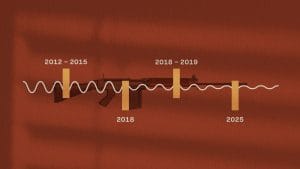
Since the outbreak of the Syrian revolution, military institutions have not functioned merely as executive arms of the state; rather, their role has expanded significantly in managing the conflict and reshaping the country’s political economy. During the early years of the conflict, non-combat or service-oriented military institutions demonstrated a notable capacity to maintain organizational cohesion, in contrast to combat units, which were more vulnerable to fragmentation due to defections and sustained military pressure by the revolutionaries. This divergence reflects the pre-existing structure of the security regime, shaped by a process of authoritarian modernization that reinforced the centrality and resilience of core institutional structures under exceptional conditions.16 Within this context, institutions such as the MCE emerged as integral components of this core institutional framework. Their role extended beyond the execution of conventional military construction projects to encompass resource management and logistical support for armed forces throughout the war. As the country transitioned into a war economy, institutions affiliated with the military expanded their authority at the expense of civilian state structures, contributing to the emergence of a system dominated by informal actors and complex intermediary networks.17 A new functional pattern for military construction activities began to take shape between 2013 and 2018, as construction and rehabilitation projects became instruments for reasserting security control, particularly in areas that had experienced large-scale military operations. This shift was closely associated with the concept of “early reconstruction,” which, rather than focusing on economic recovery or social reintegration, was primarily aimed at consolidating new political and security realities on the ground. Urban planning and infrastructure development were thus deployed as indirect mechanisms of control and governance.18
International recognition of the role played by such institutions was reflected in formal legal measures, as the MCE was placed on Western sanctions lists due to its contribution to the regime’s military effort and its role in providing logistical and construction support.
International recognition of the role played by such institutions was reflected in formal legal measures, as the MCE was placed on Western sanctions lists due to its contribution to the regime’s military effort and its role in providing logistical and construction support. This designation signaled a clear shift in how the institution was perceived, no longer merely as a technical entity, but as a political–military actor embedded within the broader conflict architecture.19
Accordingly, the period from 2011 to 2024 marked a fundamental transformation in both the function and status of the MCE within the Syrian state. Rather than remaining a limited service-oriented institution, it evolved into a central component of a military–economic governance system. This legacy presents substantial structural challenges for any future efforts to restructure the institution or integrate it into a national governance model subject to parliamentary oversight.
The Military Construction Establishment after the Fall of the Regime: Toward Redefining Its Role
The post-liberation phase has prompted a fundamental reassessment of the role of the MCE following decades of overlap between its military and civilian functions. The institution’s mandate has now been restricted to the construction of military barracks and installations, alongside a clear policy direction toward disengagement from civilian-sector activities. Efforts are also underway to confine its institutional affiliation to the Ministries of Defense and Interior exclusively.20 reflects an attempt to redefine the MCE as a specialized military engineering body, rather than a multi-functional economic actor. Within this framework, the separation of roles is presented as a central entry point for reform and restructuring. Institutional leadership views the elimination of overlap with the civilian sector as a means of addressing the structural challenges that previously affected the organization. Accordingly, reform is not perceived as inherently complex, provided that the institution remains confined to purely military functions and is no longer involved in civilian or investment-related projects.21 This perspective reflects the view that the core issue was not the institution’s militarized nature per se, but rather its expansion into civilian domains beyond its mandate.
As for unfinished civilian projects initiated prior to the post-liberation phase, including high-profile developments such as Marota City in Damascus, most are currently suspended due to legal and administrative irregularities.
As for unfinished civilian projects initiated prior to the post-liberation phase, including high-profile developments such as Marota City in Damascus, most are currently suspended due to legal and administrative irregularities. Relevant authorities are reviewing these cases, including assessing compensation for affected property owners where violations of property rights are confirmed, before determining which civilian entities will be responsible for completing these projects in the future.22
Legislative frameworks such as Legislative Decree No. 6623 and Law No. 1024 illustrate these challenges, as they enabled the state to expropriate private land, often resulting in the deprivation of property rights. Instead of receiving fair compensation, a larger share of benefits was allocated to local authorities and entities such as Cham Holding Company, with adverse consequences for residents and the marginalization of their rights.25
In parallel, responsibility for reconstruction efforts has been assigned to newly established civilian institutions, most notably the Public Works Establishment, with no direct role for the MCE. A number of personnel from Military Housing and construction bodies have been transferred to these institutions following vetting procedures aimed at excluding individuals implicated in violations or misconduct under the previous regime.26 This reflects an effort to reallocate technical expertise within a civilian institutional framework while preserving a degree of continuity.
At the same time, current military construction projects are being temporarily implemented through civilian contractors, pending the completion of the MCE’s new organizational structure and the recruitment of specialized personnel.27 This arrangement reflects an ongoing transitional phase, characterized by temporary overlap between the civilian and military sectors as a more stable institutional model is developed.
Finally, similar transformations can be observed in related institutions, such as the conversion of Military Housing into a civilian entity and the integration of the urban planning authority affiliated with the former Salvation Government into the MCE, alongside the continued operation of the Engineering Real Estate Directorate as a parallel body under the Ministry of Defense. These developments indicate that the post-liberation phase has not entailed a complete dismantling of the previous institutional legacy, but rather its reconfiguration within a new balance between security imperatives and the requirements of state reconstruction.28
Within this context, institutions such as the MCE emerged as integral components of this core institutional framework. Their role extended beyond the execution of conventional military construction projects to encompass resource management and logistical support for armed forces throughout the war.