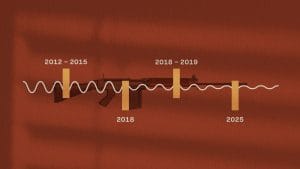
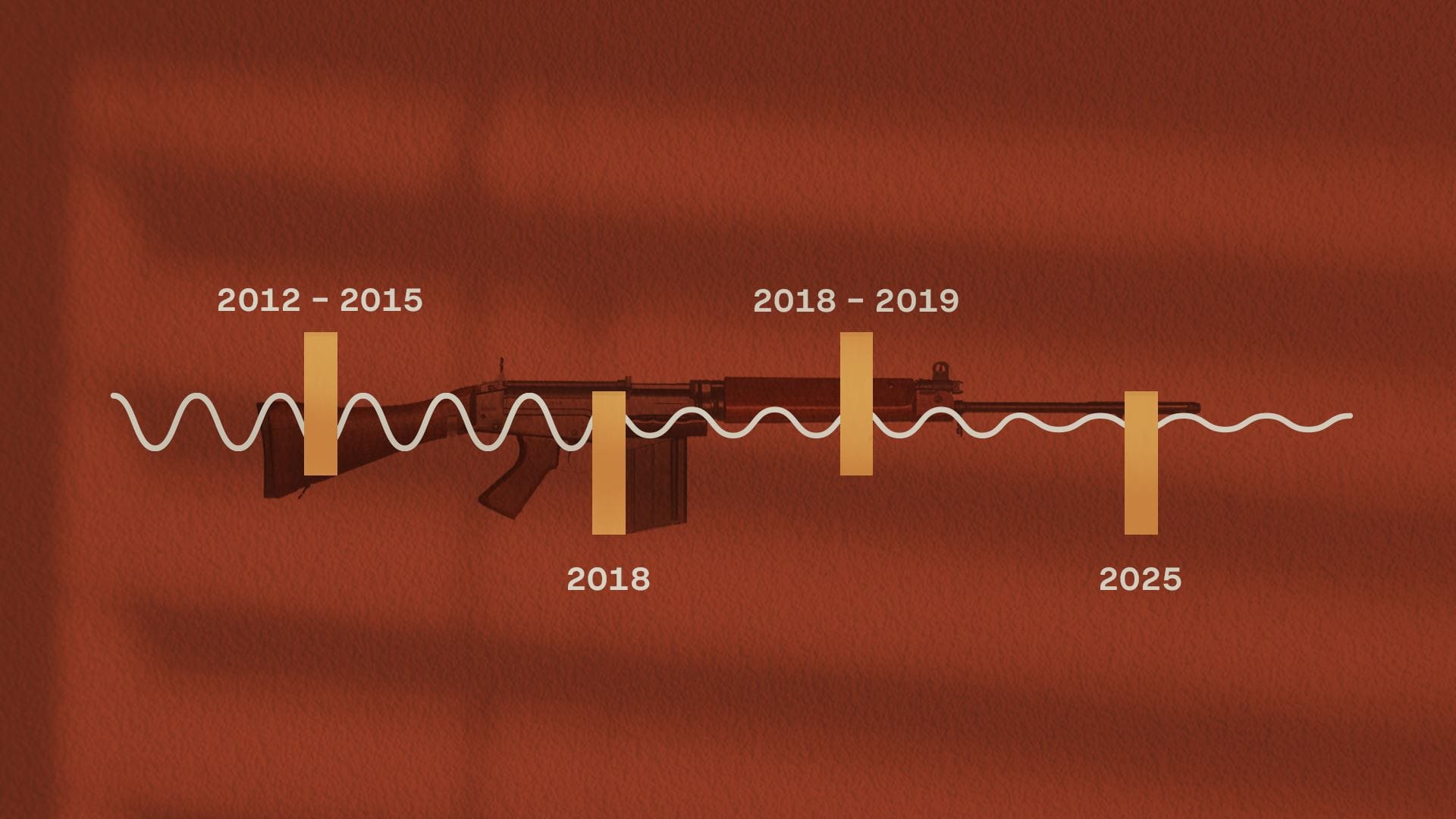
This paper engages directly with the core of this complex environment, presenting an analytical framework that maps four successive waves of armament in Suwayda Governorate and explores their relationship to recent tensions. It tracks the circulation and evolution of weaponry across militias affiliated with the regime, community-based formations, and organized armed factions, ultimately leading to widespread weapons proliferation following the collapse of the regime. The study further demonstrates how this cumulative militarization, particularly during the fourth wave, helped generate a fragile and highly volatile security environment, one susceptible to escalation over relatively minor triggers, as illustrated by the recent clashes between Arab tribal (Bedouin) groups and armed factions within the governorate. In addition, the paper analyzes the ways in which regional involvement, most notably the Israeli role, has added a further layer of complexity through targeted airstrikes intended to impose new operational realities on the ground.
The First Wave: Regime-Supervised Armament (2012–2015)
With the outbreak of the Syrian revolution in 2011, Suwayda Governorate emerged as one of the areas the regime sought to keep insulated from the revolutionary trajectory. This objective was pursued through a multi-layered strategy that capitalized on religious and social distinctions between Suwayda and its surroundings, particularly the predominantly Sunni areas of southern Syria such as Daraa. The approach relied on activating media and security tools designed to reinforce local withdrawal and entrench a narrative portraying the revolution as sectarian in nature, one that threatened religious minorities, foremost among them the Druze community. This broader framework contributed to the construction of psychological and social barriers between Suwayda and its revolutionary surroundings, creating a conducive environment for the implementation of more restrictive security policies1.
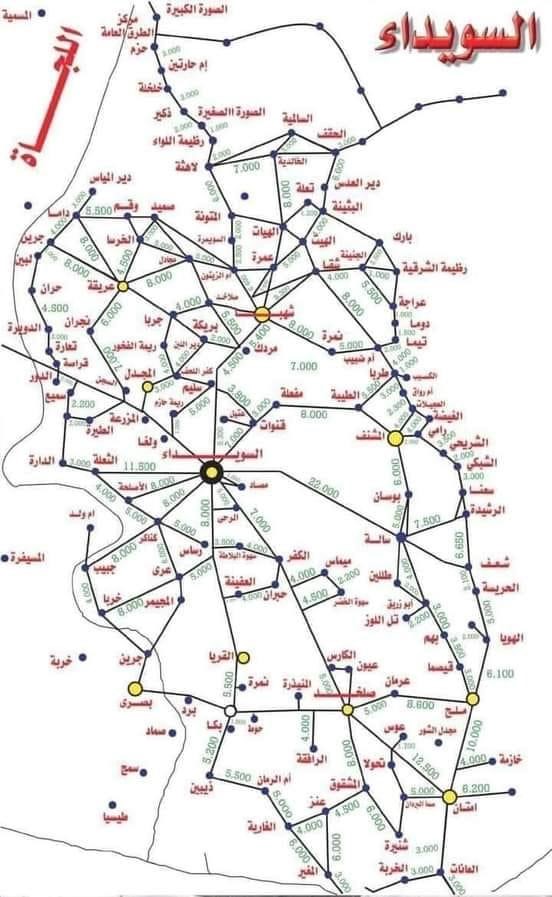
Alongside this mobilizing discourse, security agencies imposed a coercive climate marked by campaigns of arbitrary arrest, practices of torture, and instances of extrajudicial killing within detention facilities. Yet these coercive instruments proved insufficient to guarantee full control, prompting the Assad regime to adopt a socio-security mechanism based on supporting select local groups, often drawn from socially and economically marginalized segments. These groups included unemployed youth and individuals with prior criminal records, who were reintegrated into semi-military formations under locally branded designations such as the “Homeland Protectors” faction or the “Luna” group, so named in reference to its backing by Luna al-Shibl, a former adviser to Assad, led by Nazih al-Jarbo‘2.
This shift constituted what may be described as the first wave of local armament: a directed and regime-backed process financed directly by the former regime, which gradually evolved into patterns of self-financing through informal channels, including smuggling, kidnapping, and participation in the war economy3. The result was the emergence of an armed social structure that did not rest on institutional discipline, but rather on networks of interests and security patronage. This armament did not merely aim to deter internal dissent; it also contributed to reshaping power dynamics within the governorate4.
With the outbreak of the Syrian revolution in 2011, Suwayda Governorate emerged as one of the areas the regime sought to keep insulated from the revolutionary trajectory. This objective was pursued through a multi-layered strategy that capitalized on religious and social distinctions between Suwayda and its surroundings.
Amid these developments, Suwayda faced additional security pressures stemming from the expansion of the Islamic State (ISIS) toward the outskirts of northeastern villages. This development created a pressing geo-security environment in which the governorate became effectively encircled between threats from ISIS to the east and persistent tensions along its southwestern perimeter. This reality coincided with continued developmental marginalization and the absence of effective political representation, deepening the sense of isolation and prompting broad segments of the population to seek alternative mechanisms for protection and collective self-expression.
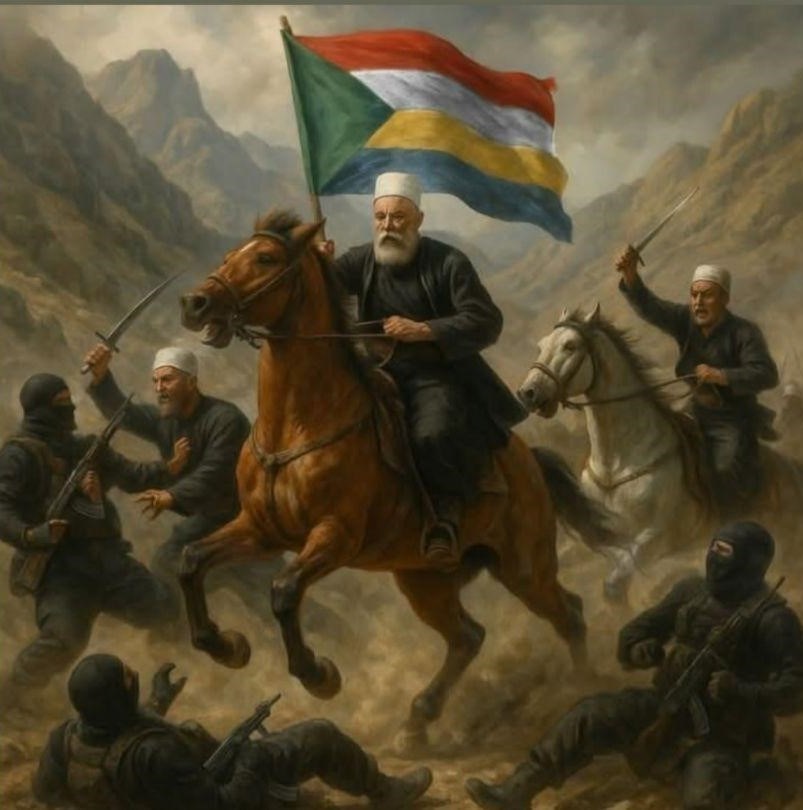
The rise of the movement coincided with a noticeable increase in refusals to perform compulsory military service in the regime’s armed forces. Hundreds of young men opted to remain within their local communities and engage in forms of self-defense rather than participate in external battlefronts that did not align with the priorities of their local society. Although limited at the time in terms of organization and armament, this phenomenon marked a significant development in the relationship between the local community and the central state, contributing to a gradual decline in the influence of militias affiliated with regime security agencies within the governorate.
The Second Wave: Shock-Driven Armament Following the al-Muqran al-Sharqi Massacre (2018)
Approximately four years after the emergence of the Men of Dignity (Rijal al-Karama) movement, Suwayda Governorate remained relatively insulated from the sharp military polarization that characterized the broader Syrian conflict. The security situation within the governorate remained contained within a framework of “limited armament,” which retained a locally defensive character, as social actors sought to maintain a balanced distance from the parties to the conflict without direct engagement in either opposition or regime battlefronts. However, this fragile equilibrium was fundamentally disrupted in July 2018, when ISIS launched a large-scale assault on the villages of al-Muqran al-Sharqi and the northeastern countryside of Suwayda, targeting villages such as al-Shabki, al-Shreihi, Douma, and others. This attack constituted a decisive turning point in the trajectory of armament within the governorate6.
The assault resulted in a devastating massacre in which more than 250 civilians were killed, while over thirty women and children were abducted. The incident left a profound psychological impact on the local community, not only because of the scale of casualties, but also due to the circumstances surrounding the attack. In the weeks preceding the massacre, specifically in early May 2018, the regime transferred groups affiliated with ISIS that had been stationed in areas south of Damascus and in the Yarmouk Basin west of Daraa to the eastern desert of Suwayda Governorate. This move, from the outset, raised serious concerns among local residents. These concerns were further intensified by the sudden withdrawal of regime forces from military positions adjacent to the targeted area just hours before the attack, reinforcing a widespread perception of collusion or deliberate abandonment of the region7. This sequence of events created the conditions for rapid shifts in both security behavior and community dynamics within Suwayda.
In local religious and social narratives, the July battle came to be memorialized as a moment of “collective catastrophe,” framed as an existential test of the identity and security of the Druze community as a whole, across its geographic presence in Syria, Lebanon, Palestine, and Jordan. In the wake of the shock, the governorate experienced an unprecedented wave of panic, particularly in the eastern areas, prompting residents to arm themselves rapidly. Within only a few weeks, informal weapons markets across southern Syria recorded heightened activity in the sale of small arms, with dozens of purchase transactions reported daily8, alongside the distribution of weapons by local factions, procured through external funding from Druze expatriate communities, particularly from Druze populations in Israel and Lebanon9.
Fear became a principal driver in reshaping both the relationship between the individual and the community and the relationship between residents and weapons. For the first time since the outbreak of the revolution, the carrying of arms shifted from being an emergency option adopted by certain actors to a generalized social practice.
These developments inevitably reshaped attitudes within the Druze community in the governorate. Weapons were no longer perceived as a security burden requiring caution; instead, they came to be treated as a “guarantee of survival” that could not be relinquished. The possession of individual firearms, even at modest levels, including hunting weapons, became embedded within frameworks of personal and family security10, thereby expanding demand and increasing reliance on smuggling networks and illicit arms markets.
This dynamic was accompanied by the resurgence of arms dealers and smugglers, alongside the emergence of more organized local networks involved in the sale and distribution of light weapons. Demand also increased for surveillance and monitoring tools, such as cameras and night-vision devices. This accelerated armament was neither centralized nor organized under unified leadership; rather, it took the form of spontaneous responses to unfolding developments. It reflected an urgent social need for protection in the context of the Assad regime’s abandonment, or perceived collusion, in failing to perform its fundamental role in ensuring security.
On this basis, fear became a principal driver in reshaping both the relationship between the individual and the community and the relationship between residents and weapons. For the first time since the outbreak of the revolution, the carrying of arms shifted from being an emergency option adopted by certain actors to a generalized social practice that quickly became the prevailing norm within the governorate. This transformation paved the way for the emergence of a new form of community organization grounded in the principle of “arms in exchange for security,” a consensual logic adopted by the community in the absence of viable institutional alternatives.
The Third Wave: Armament from the Surplus of Defeat (2018–2019)
When the ousted Assad regime reasserted control over Daraa and Quneitra Governorates with Russian support in mid-2018, most armed opposition factions in southern Syria disintegrated, particularly those deployed in western Daraa, which lay in close proximity to the outskirts of Suwayda’s villages. This collapse occurred swiftly and with little warning, leaving fighters without credible guarantees, either in the form of secure settlement arrangements or structured withdrawal mechanisms, while numerous commanders fled to Jordan11. In the absence of clearly defined exit routes, many formations were compelled to relinquish parts of their weapons stockpiles in order to return to civilian life, an option that offered a potential, though uncertain, path to survival, or to enter reconciliation processes. This situation created the conditions for a large-scale disposal of military materiel12.
Within this setting, Suwayda Governorate became a nearby and comparatively secure destination for the redistribution of these weapons, particularly given the limited presence of regime forces in certain sectors and the weak monitoring of entry points and secondary routes connecting the rural areas of Daraa and Suwayda. Armed groups and smuggling networks transported weapons between the two areas, either for storage or commercial resale13. During August and September 2018, a marked increase in weapons proliferation was documented within the governorate, described in some informal accounts as the highest recorded since the beginning of unrest in the province, both in terms of the volume and diversity of weapon types. This wave was directly associated with surplus armaments originating from factions that had entered reconciliation arrangements in Daraa.
In contrast to earlier waves, which were largely limited to light individual weapons, this phase witnessed the introduction of more sophisticated categories of armaments into Suwayda’s local environment, including:
- Medium-grade weapons, such as PKC machine guns and mortar munitions of varying calibers.
- Mobile heavy weaponry, including vehicle-mounted anti-aircraft guns of 23 mm caliber, as well as heavy machine guns of 12.5 mm and 14.5 mm calibers.
- Advanced logistical assets, such as modified four-wheel-drive vehicles adapted for combat use (particularly Toyota Hilux pickup trucks), large ammunition reserves, and enhanced military communication systems.
Transactions and transfers were facilitated through local intermediaries in Suwayda who maintained direct connections with certain military commanders in Daraa. Informal transportation channels, primarily smuggling networks, played a decisive role in enabling the movement of these materials, utilizing remote routes across the al-Lajat region and the eastern and southeastern countryside.
During August and September 2018, a marked increase in weapons proliferation was documented within the governorate, described in some informal accounts as the highest recorded since the beginning of unrest in the province.
This wave generated noticeable shifts in the armament profile of Suwayda. For the first time, some local factions obtained levels of firepower that extended beyond conventional self-defense capacities and began to resemble the operational structure of organized armed groups capable of shaping realities on the ground. The increased availability of weapons also altered power balances among armed actors and reinforced the operational independence of certain factions from any central authority or unified command14.
This period can therefore be described as a phase of “surplus armament,” arising from the vacuum created by the defeat of southern factions, yet rapidly transforming into fertile ground for the growth of the black arms market. The sharp rise in the availability and stockpiling of weapons, combined with the diversification of supply sources, fostered the emergence of a parallel economic system based on smuggling, trading, and brokerage. These developments established the foundations of a more intricate security landscape whose effects continued to influence armed dynamics in subsequent years, ultimately culminating in the fourth, and most perilous, wave of armament linked to the collapse of the Assad regime and the widespread looting of military installations across the region.
The Fourth Wave: Post-State Armament—Chaos (2025)
With the collapse of the Assad regime in January 2024, Suwayda entered a critical security phase characterized by the fragmentation of authority and the opening of space for disorder. This sudden vacuum produced rapid transformations in the nature of armament within the governorate.
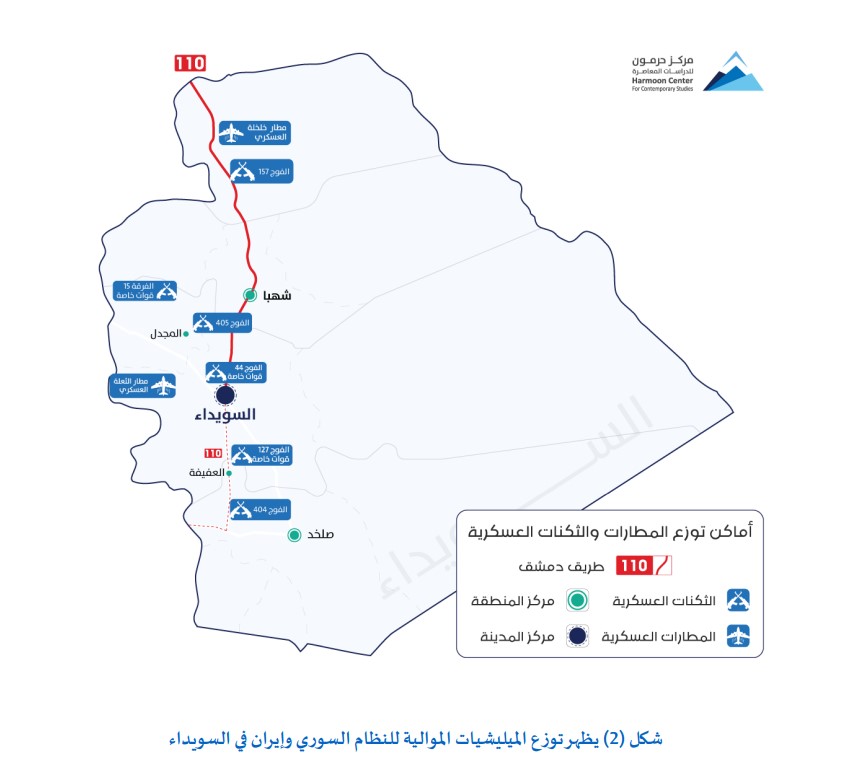
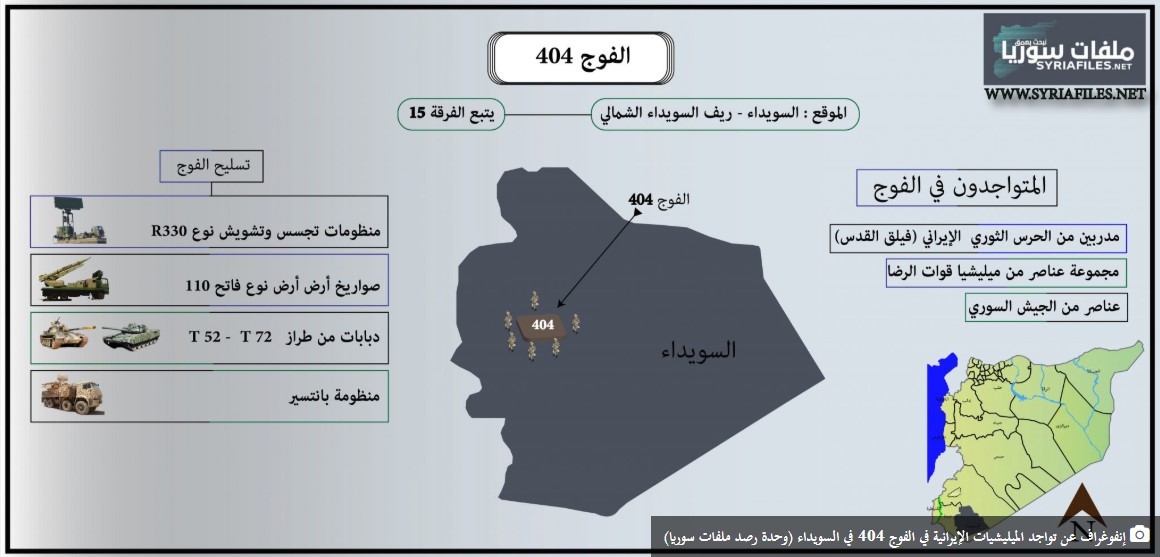
To understand the pattern of armament during this phase, it is necessary to examine the military formations abandoned by soldiers and officers during the regime’s collapse, leaving behind extensive weapons stockpiles. Among the most prominent of these formations was the 15th Special Forces Division, whose manpower was estimated at approximately 15,000 personnel. Consequently, at least in theoretical terms, even accounting for the deployment of elements of the division across fronts such as Aleppo and Idlib, substantial quantities of weapons were likely left behind in the division’s depots distributed across the governorate. These depots were spread across five principal regiments: the 157th Regiment in the northern part of the governorate; the 405th Special Forces Artillery Regiment near the city of Shahba; the 44th Regiment near the city of Suwayda; the 127th Special Forces Regiment in the southern sector; and the 404th Regiment. In addition to these units, significant stockpiles were also located at al-Tha‘la and Khalkhala military airbases15.
This consolidation of control was not an isolated phenomenon. Semi-organized smuggling routes emerged, linking military depots in the governorates of Daraa and Suwayda, through which large quantities of military equipment were transferred into the governorate, either for the benefit of existing local factions or through intermediaries and newly emerging arms traders18. This pattern was confirmed by the Syrian Ministry of Interior, which announced the seizure of several weapons shipments moving from Daraa toward Suwayda. These shipments included 14.5 mm heavy machine guns, Malutka-type anti-armor missiles, and 107 mm Katyusha rockets19. Subsequent reports also indicated that residents dismantled rockets and shells to extract the copper contained within them for resale as scrap metal20.
For the first time since 2011, heavy weaponry appeared openly outside state control in Suwayda, with images circulating of tanks moving through the streets of the city.
For the first time since 2011, heavy weaponry appeared openly outside state control in Suwayda, with images circulating of tanks moving through the streets of the city21. In this sense, the fourth wave of armament inaugurated a qualitatively new phase that proved difficult to regulate or contain, characterized by the intersection of multiple forms of armed power: community-based weaponry tied to local affiliations; military spoils resulting from security breakdowns; and weapons linked to disorder and organized criminal activity22. Within this context, Suwayda entered a new stage in the relationship between the local community and the use of force, one in which authority no longer derived from a clearly defined institutional source, but instead emerged from the persistent presence of a “perceived threat,” embedded within the collective imagination as both a source of legitimacy and a trigger for reaction.
Back to the Starting Point: Suwayda’s Arms and the Interplay of Local and Regional Dynamics
Against the backdrop of this turbulent landscape, the security breakdown following the regime’s collapse deepened a collective sense of anxiety and uncertainty within Suwayda, as the governorate became increasingly exposed after years of fragile balances, at times between the former regime and local factions, and at other times among the factions themselves. A perception of an existential threat, whether imagined or real, emanating from the new authorities in Damascus took root, reinforced by the recollection of earlier massacres, such as the al-Muqran al-Sharqi massacre and the Ayn Lawza massacre in Idlib. These events strengthened a prevailing narrative portraying the Druze community as an isolated enclave surrounded by a vast Sunni environment.
Within this environment, the possession of arms was no longer regarded as a political choice but rather as an existential imperative, reflecting a perceived necessity for survival and for maintaining a minimum degree of presence and influence. At the same time, levels of armament continued to rise as the country’s security and military institutions gradually took shape. The Syrian government attempted to assert its authority and sovereignty across national territory; however, it encountered resistance, as convoys affiliated with the Ministry of Interior were prevented from entering the governorate23. In response, the traditional religious leadership, represented by Sheikh Hikmat al-Hijri, adopted an increasingly confrontational stance toward the authorities, depicting them as an extremist force and as actors potentially subject to international accountability24. This discourse implicitly associated the new authorities with the violent legacy attributed to ISIS within the governorate’s collective memory.
Issues connected to Druze-populated areas increasingly evolved into potential flashpoints capable of escalating at any moment. In this context, developments in the cities of Jaramana and Sahnaya, both characterized by Druze majorities, emerged as particularly significant.
Under these conditions, armament came to be driven simultaneously by a sense of existential threat and by emerging forms of political opposition, gradually evolving into an effective mechanism for mobilization within the Druze community.
At the operational level, this phase saw the emergence of alliance networks linking certain armed factions with local notables, shaped primarily by immediate and localized interests rather than ideological alignments or clearly defined political affiliations. The entity referred to as the “Suwayda Military Council” stands as a representative example of this pattern, bringing together dozens of local groups under a single framework25. Within this tense setting, issues connected to Druze-populated areas increasingly evolved into potential flashpoints capable of escalating at any moment. In this context, developments in the cities of Jaramana and Sahnaya26, both characterized by Druze majorities, emerged as particularly significant after they came under government control following intense clashes. These events were accompanied by rising tensions along the Damascus–Suwayda highway, where confrontations broke out between Druze factions mobilized from Suwayda in support of the two cities and armed groups drawn from Arab tribal (Bedouin) communities, resulting in substantial casualties and injuries on both sides.
Repeated clashes between local factions and Bedouin tribal groups in Suwayda Governorate represented an extension of a long-standing state of chronic tension, fluctuating over the years between competition for influence and mutual accusations of involvement in smuggling and kidnapping operations27. These complex dynamics functioned as a constant trigger mechanism, ready to ignite at the slightest friction. That trigger was ultimately activated by the kidnapping of a vegetable trader from Suwayda, which set off a chain of retaliatory abductions. The violence escalated as Druze groups launched attacks on Bedouin neighborhoods within the city of Suwayda, evolving into intense confrontations that exposed the fragility of relations between Suwayda and its surrounding tribal environment and revealed the depth of underlying security anxieties embedded within the local structure28.
Following the withdrawal of Syrian forces from Suwayda Governorate, internal violence and retaliatory acts escalated sharply. Armed local groups aligned with Sheikh Hikmat al-Hijri carried out sustained attacks against Bedouin communities in the area.
The intensity of the clashes escalated to unprecedented levels, resulting in dozens of casualties and injuries on both sides. This prompted Syrian authorities to dispatch Internal Security Forces to Suwayda following an agreement and public statement issued by the Druze spiritual authority, according to Brigadier Ahmad al-Dalati, Director of Internal Security in the governorate. However, this intervention was not interpreted by opposing actors as a measure to restore order; rather, it was perceived as an attempt to impose a fait accompli and reassert full control over the governorate under the pretext of halting security deterioration. This perception led Sheikh al-Hijri to retract the earlier statement that had welcomed the entry of government forces into the governorate29.
Subsequently, direct confrontations erupted between security forces and armed groups aligned with al-Hijri, resulting in significant casualties among security personnel in what was described as a “treacherous attack.” Amid this escalation, the Syrian army intervened decisively, imposing full control over the city within hours30.
Following the Syrian army’s consolidation of control over the city of Suwayda and parts of its western and northern countryside, regional tensions escalated markedly. This escalation took the form of a series of Israeli airstrikes within Syrian territory, initially conducted as warning strikes targeting military and security sites inside Suwayda Governorate. Some reports linked these developments to diplomatic and religious initiatives associated with the Druze religious leadership in Israel and Syria, represented respectively by Mowafaq Tarif and Hikmat al-Hijri.
These strikes soon evolved into a qualitatively escalatory phase, extending to highly sensitive targets in Damascus, including the General Staff headquarters of the Ministry of Defense in Umayyad Square in central Damascus, as well as a strike directed at the Presidential Palace. This escalation was accompanied by dozens of additional strikes across the operational field in Daraa and Suwayda, targeting Syrian army and security personnel. Behind this escalation, however, an earlier and unannounced diplomatic dimension began to surface. Some reports suggested that Damascus interpreted recent talks between Syrian and Israeli representatives in the Azerbaijani capital, Baku, as amounting to implicit authorization to reassert military control over Suwayda. This interpretation rested on the assumption within Syrian leadership that such regional coordination signaled tacit approval, or at the very least, a lack of objection, to government action in areas characterized by sensitive Druze demographic dynamics31.
Against this backdrop, government forces were ultimately compelled to withdraw from the city of Suwayda in order to mitigate further losses caused by ongoing aerial strikes. This withdrawal altered the balance of territorial control and reopened the contentious issue of relations between the central authorities and the governorate, this time unfolding within the context of unprecedented regional pressures.
Following the withdrawal of Syrian forces from Suwayda Governorate, internal violence and retaliatory acts escalated sharply. Armed local groups aligned with Sheikh Hikmat al-Hijri carried out sustained attacks against Bedouin communities in the area, amid reports documenting abuses, killings, and detentions targeting tribal populations. This escalation prompted widespread responses among tribal networks across Syria, as Arab tribes from multiple governorates answered calls for faz‘a, collective mobilization in defense of kin, and began moving forces toward Suwayda in support of their counterparts.
Violent clashes soon broke out between Druze factions and advancing Arab tribal groups, transforming what had initially been a localized confrontation into a conflict with the potential to evolve into a broader social confrontation among communities distributed across the Syrian geographic landscape.
Confronted with the risk of deepening societal fragmentation and escalating communal violence, regional actors entered the crisis through undisclosed diplomatic channels, resulting in an implicit arrangement brokered by influential external parties. This understanding provided for the relocation of remaining detained Bedouin individuals from Suwayda to Daraa Governorate, in exchange for assurances regarding their safety and their removal from the immediate conflict zone.
Despite its short-term effectiveness in containing the confrontation, this measure was widely characterized at the local level as a form of “forced displacement,” perceived as an attempt to defuse tensions superficially without addressing the structural roots of the conflict, thereby leaving the situation susceptible to renewed escalation at the first sign of friction32.
Contextual Recommendations
Over more than a decade of significant transformations and rapid developments in Suwayda, particularly in the aftermath of the collapse of the Syrian regime, it has become increasingly clear that the governorate has reached a critical juncture, signaling the onset of a phase fundamentally distinct from previous periods. This transition reflects the cumulative consequences of widespread armament across multiple social constituencies, combined with the central government’s constrained ability to regulate the security environment effectively.
Furthermore, the continuation of this state of disorder and political ambiguity risks turning Suwayda into an open arena for expanding regional intervention, with external actors seeking to exploit instability in pursuit of their geopolitical agendas. As the governorate grows more vulnerable to security threats, and as the central government remains unable to impose a durable framework for stability, the likelihood increases that Suwayda will develop into a sustained conflict hub, one that threatens not only its internal social cohesion but also places southern Syria as a whole on a path toward prolonged fragmentation. Such a trajectory would undermine recovery prospects and weaken any future initiatives aimed at establishing comprehensive national settlements.
Available indicators collectively suggest a gradual shift toward entrenched instability, marked by the weakening of traditional institutions and the intensification of confrontations between tribal structures and armed factions competing for influence within a pervasive legal and security vacuum. This environment creates conditions for significant structural changes within local society, most notably the fragmentation of long-established social systems and the erosion, or even confrontation, of community-based authorities that historically functioned as stabilizing forces during periods of crisis. In the absence of confidence in any regulatory authority, and amid declining coordination among influential actors, violence increasingly emerges as a practical means of dispute resolution, displacing consensus-driven mechanisms with dynamics governed by force and weaponry.
Under these circumstances, Suwayda faces the growing risk of drifting into a condition operating beyond the boundaries of the national framework, as disorder deepens, state authority recedes, and informal power networks expand. Its open geography, deteriorating service infrastructure, and widening mistrust toward governing institutions collectively make the governorate an increasingly attractive environment for criminal organizations, arms trafficking networks, and remnants of the former regime. With each passing day outside effective control, or in the absence of a mutually accepted governance framework, social cohesion continues to deteriorate, while reliance on external actors and armed force becomes entrenched as an alternative source of authority. This trajectory points toward the possibility of a prolonged and potentially irreversible breakdown. Ignoring these developments or delaying meaningful containment measures effectively amounts to acquiescing to a de facto, though unrecognized, separation from the state, thereby risking the governorate’s descent into a sustained cycle of violence and internal conflict that may render future reintegration exceptionally difficult.